
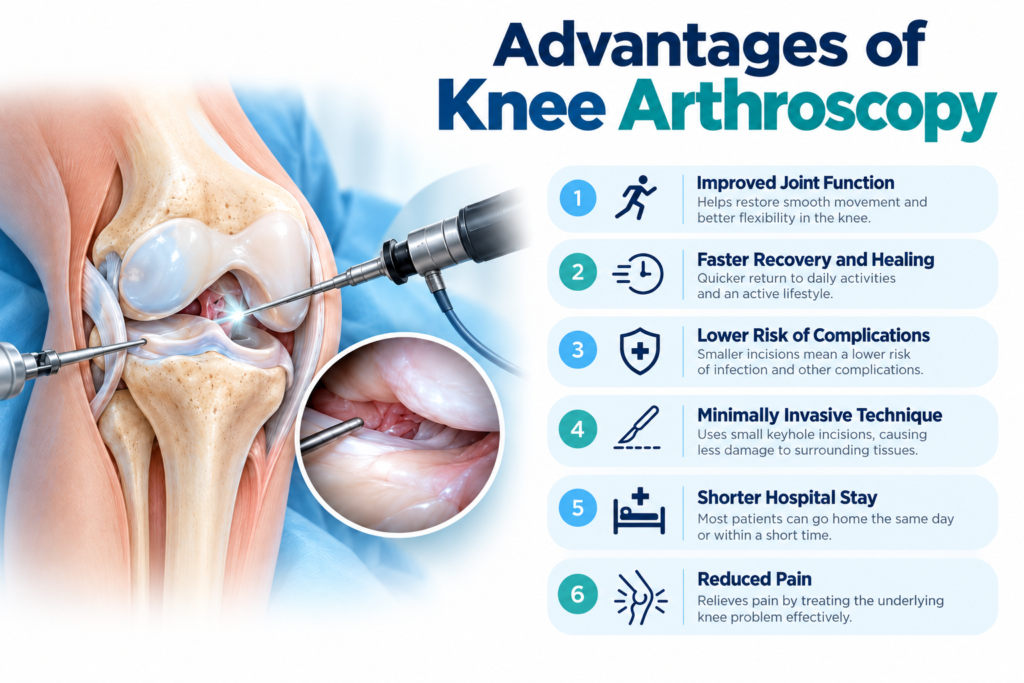
Knee pain, stiffness, and restricted movement can make everyday activities difficult. Knee arthroscopy is a minimally invasive surgical procedure that helps doctors diagnose and treat certain knee joint problems through small incisions. At PanOrtho Hospital, patients can consult an orthopaedic specialist to understand suitable treatment options for their knee condition.
What Is Knee Arthroscopy?
Knee arthroscopy is a surgical technique in which an orthopaedic surgeon uses a small camera, called an arthroscope, to examine the inside of the knee joint. Specialised instruments can be used to treat certain problems involving the meniscus, cartilage, ligaments, or loose fragments within the joint.
An arthroscopy surgeon in PCMC can assess the knee condition and determine whether arthroscopic surgery is an appropriate treatment option based on the patient’s symptoms, examination, and imaging results.
Key Advantages of Knee Arthroscopy
1. Minimally Invasive Technique
Knee arthroscopy typically involves small incisions rather than a large surgical opening. This can help minimise damage to surrounding tissues compared with some open procedures.
2. Reduced Post-Surgical Pain
Many patients experience less post-operative discomfort than they might after comparable open surgery. Pain levels and recovery experiences vary depending on the procedure performed.
3. Faster Recovery and Healing
Because the procedure uses small incisions, recovery may be quicker for suitable conditions. The time needed to resume normal activities depends on the extent of treatment and the patient’s overall health.
4. Improved Knee Joint Function
Arthroscopy can help address specific problems, such as certain meniscus tears or loose bodies, that interfere with knee movement. Appropriate treatment may improve mobility and daily functioning.
5. Shorter Hospital Stay
Many knee arthroscopy procedures are performed as day-care surgeries, allowing patients to return home on the same day when medically appropriate.
6. Potentially Lower Risk of Certain Complications
The minimally invasive approach may reduce some complications associated with larger surgical incisions. However, knee arthroscopy still carries risks, including infection, blood clots, and persistent symptoms.
When Is Knee Arthroscopy Recommended?
An orthopaedic surgeon may recommend knee arthroscopy for selected conditions, including:
-
Certain meniscus tears
-
Loose fragments of bone or cartilage within the knee
-
Some ligament-related injuries
-
Selected cartilage problems
-
Persistent knee symptoms requiring further evaluation
Knee arthroscopy is not suitable for every knee condition. For example, it generally offers limited benefit for uncomplicated knee osteoarthritis, so a thorough assessment is important before deciding on surgery.
Recovery After Knee Arthroscopy
Recovery depends on the condition being treated and the specific procedure performed. Patients may need to follow instructions regarding wound care, pain management, weight-bearing, and physiotherapy.
Following the prescribed rehabilitation plan can help restore strength, flexibility, and knee movement. Patients should attend follow-up appointments and contact their healthcare provider if they develop concerning symptoms such as increasing swelling, fever, or severe pain.
Consult an Arthroscopy Surgeon in PCMC
If knee pain or restricted movement is affecting your daily routine, an orthopaedic evaluation can help identify the cause and determine suitable treatment options. At PanOrtho Hospital, patients can seek guidance about knee conditions, available treatments, and whether knee arthroscopy may be appropriate for them.
Choosing treatment after a proper clinical assessment can help patients make informed decisions about their knee health and recovery.
 Select an element to maximize. Press ESC to cancel.