
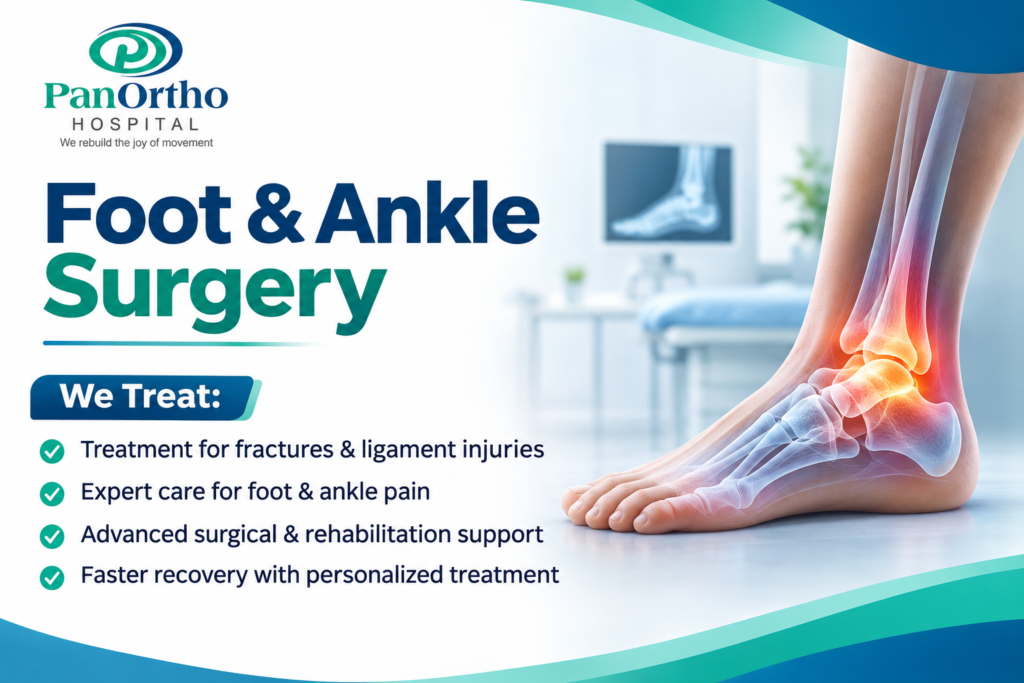
Foot and ankle problems can affect your ability to walk, stand, exercise, and perform everyday activities comfortably. Conditions such as fractures, ligament injuries, ankle instability, tendon damage, and chronic foot pain may require specialised orthopaedic care. Early diagnosis and appropriate treatment can help prevent complications and support better mobility.
If you are looking for Foot & Ankle Surgery in PCMC, PanOrtho Hospital provides specialised orthopaedic care for various foot and ankle conditions, with a focus on accurate diagnosis, appropriate surgical treatment, and rehabilitation support.
Understanding Foot and Ankle Problems
The foot and ankle contain several bones, joints, muscles, tendons, and ligaments that work together to support body weight and maintain balance. An injury or medical condition affecting any of these structures can make walking and movement difficult.
Some common foot and ankle problems include:
-
Ankle Fractures: Broken bones around the ankle caused by falls, accidents, or sports injuries.
-
Ligament Injuries: Damage to the ligaments that support the ankle joint, often resulting from twisting injuries.
-
Ankle Instability: Repeated ankle twisting or giving way due to weakened or damaged ligaments.
-
Tendon Injuries: Inflammation, degeneration, or tears affecting tendons around the foot and ankle.
-
Chronic Foot Pain: Persistent discomfort caused by joint problems, injuries, or structural abnormalities.
-
Foot Deformities: Structural changes that affect walking, balance, and foot function.
Common Symptoms That May Require Foot and Ankle Treatment
Recognising symptoms early can help you seek appropriate medical attention. Consult an orthopaedic specialist if you experience:
-
Persistent foot or ankle pain.
-
Swelling around the ankle or foot.
-
Difficulty walking or standing for long periods.
-
Repeated ankle sprains or instability.
-
Limited ankle movement or stiffness.
-
Pain while climbing stairs or performing physical activities.
-
Difficulty bearing weight after an injury.
Severe pain, visible deformity, or an inability to bear weight after an injury requires prompt medical assessment.
When Is Foot and Ankle Surgery Required?
Not every foot or ankle problem requires surgery. Many conditions can initially be managed with conservative treatments such as medication, activity modification, physiotherapy, supportive footwear, or braces.
However, surgery may be considered when:
-
A fracture requires surgical stabilisation.
-
Ligament damage causes persistent ankle instability.
-
Severe tendon injuries do not improve with conservative treatment.
-
Joint damage affects normal movement.
-
Foot deformities cause significant pain or functional difficulties.
-
Previous treatment has not provided sufficient improvement.
The appropriate surgical approach depends on the patient’s condition, age, activity level, and overall health.
Types of Foot and Ankle Surgical Procedures
Depending on the diagnosis, an orthopaedic surgeon may recommend different procedures.
1. Ankle Fracture Surgery
Ankle fracture surgery may involve repositioning broken bones and stabilising them using plates, screws, or other fixation devices. The goal is to restore proper bone alignment and joint function.
2. Ankle Ligament Reconstruction
Patients with repeated ankle sprains or chronic ankle instability may benefit from ligament repair or reconstruction. This procedure aims to improve joint stability and support better movement.
3. Tendon Repair Surgery
Severely damaged or torn tendons may require surgical repair to restore their function. Rehabilitation is an important part of recovery.
4. Ankle Arthroscopy
Ankle arthroscopy is a minimally invasive procedure that uses a small camera and specialised instruments to examine and treat certain problems inside the ankle joint.
5. Foot Deformity Correction
Surgical correction may be recommended for selected structural deformities that cause persistent pain or interfere with walking.
Benefits of Advanced Foot and Ankle Treatment
Appropriate treatment and rehabilitation can help patients:
-
Improve walking ability and joint movement.
-
Reduce pain and discomfort.
-
Restore ankle stability.
-
Improve balance and daily functioning.
-
Recover from fractures and ligament injuries.
-
Return gradually to regular physical activities.
Recovery time varies depending on the procedure, injury severity, and individual healing process.
Importance of Rehabilitation After Foot and Ankle Surgery
Rehabilitation plays an important role in recovery following foot and ankle surgery. A structured rehabilitation programme may include:
-
Guided ankle mobility exercises.
-
Muscle-strengthening activities.
-
Balance and coordination training.
-
Gradual weight-bearing exercises.
-
Walking and gait training.
-
Activity modification and follow-up assessments.
Following the surgeon’s instructions and attending scheduled follow-ups can support a safer recovery.
Why Choose PanOrtho Hospital for Foot and Ankle Treatment in PCMC?
PanOrtho Hospital focuses on orthopaedic evaluation and treatment for conditions affecting bones, joints, muscles, ligaments, and tendons.
Patients seeking foot and ankle treatment can benefit from an approach that focuses on:
-
Evaluation of foot and ankle injuries.
-
Treatment planning based on individual conditions.
-
Surgical management when clinically required.
-
Support for fracture and ligament injuries.
-
Rehabilitation and recovery guidance.
-
Follow-up care to monitor healing and mobility.
Consult for Foot & Ankle Surgery in PCMC
Foot and ankle pain should not be ignored, especially when it affects your ability to walk, stand, or participate in everyday activities. Timely medical evaluation can help identify the underlying problem and determine the right treatment approach.
If you are searching for Foot & Ankle Surgery in PCMC, consult PanOrtho Hospital for orthopaedic evaluation and treatment options. The right treatment plan can help you work towards improved mobility, stability, and a more active lifestyle.
 Select an element to maximize. Press ESC to cancel.