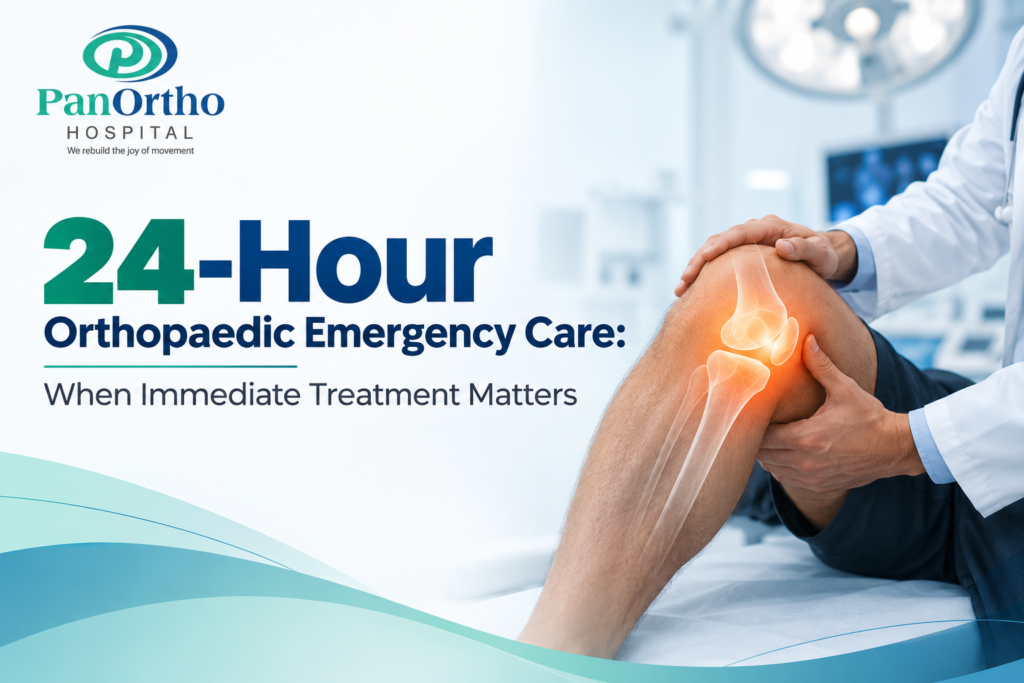
Accidents and injuries do not always happen during convenient hours. A fall, road accident, sports injury, sudden severe joint pain, or suspected fracture can happen at any time and may require prompt medical attention. PanOrtho Hospital provides 24-hour emergency orthopaedic care in PCMC for accident-related injuries and other urgent musculoskeletal conditions.
As an accident and emergency hospital in PCMC, timely evaluation can help identify fractures, dislocations, sports injuries, and other trauma-related conditions and guide appropriate treatment. Knowing when to seek emergency care can help prevent complications and support better recovery.
What Is an Orthopaedic Emergency?
An orthopaedic emergency involves an injury or musculoskeletal problem that requires prompt assessment and treatment to protect bones, joints, nerves, blood vessels, and overall limb function.
Some injuries may appear manageable initially but can become more serious if treatment is delayed.
When Should You Seek Emergency Orthopaedic Care?
Consider immediate medical evaluation after an injury if you experience:
- Severe or rapidly increasing pain
- Visible deformity of a limb or joint
- Suspected fracture
- Inability to stand, walk, or put weight on the injured limb
- Significant swelling or bruising
- Loss of movement following an injury
- Numbness, tingling, or weakness
- An open wound associated with a suspected fracture
- A joint that appears dislocated
- Severe injuries following a road accident or fall
- Sudden loss of function in an arm, hand, leg, or foot
These symptoms can indicate an injury that requires timely assessment.
Common Orthopaedic Emergencies
1. Fractures
Broken bones can occur because of falls, road accidents, sports injuries, or direct trauma. Some fractures can be treated without surgery, while others may require reduction, immobilisation, or surgical fixation.
Early assessment helps determine the type and severity of the fracture and the appropriate treatment.
2. Joint Dislocations
A dislocation occurs when the bones forming a joint are forced out of their normal position. The shoulder, elbow, hip, and knee can be affected.
A suspected dislocation should not be forcefully repositioned at home. Medical evaluation is important to restore alignment safely and assess surrounding tissues.
3. Severe Sports Injuries
High-impact sports injuries can damage ligaments, tendons, cartilage, or bones. An injury accompanied by severe pain, swelling, instability, or inability to continue activity may need prompt evaluation.
4. Road Traffic and Workplace Injuries
Accidents can cause multiple injuries involving bones, joints, muscles, nerves, and soft tissues. Even when an injury does not look severe externally, internal damage may still be present.
5. Open Fractures and Serious Wounds
When a fracture is associated with an open wound, there may be a higher risk of infection and damage to surrounding tissues. Such injuries require urgent medical attention.
Why Timely Orthopaedic Treatment Matters
The timing of treatment depends on the type and severity of the injury. Prompt evaluation can help:
- Identify fractures or other serious injuries
- Assess damage to nerves and blood vessels
- Restore proper alignment when necessary
- Reduce the risk of complications
- Begin appropriate pain management
- Plan further treatment and rehabilitation
Not every injury requires emergency surgery. However, an urgent assessment can help determine what treatment is actually needed.
What Should You Do Before Reaching the Hospital?
After an injury:
- Keep the injured area as still as possible.
- Avoid putting weight on a painful or injured limb.
- Do not attempt to straighten a visibly deformed limb.
- Avoid trying to put a dislocated joint back into position yourself.
- If there is bleeding, apply gentle pressure with a clean dressing where appropriate.
- For serious injuries, seek emergency medical assistance rather than attempting to travel unsafely.
Why Choose Dedicated Orthopaedic Emergency Care?
Orthopaedic injuries may require more than pain relief. Proper evaluation may involve physical examination and imaging such as X-rays or other scans, depending on the injury.
A dedicated orthopaedic team can assess the injury, determine its severity, and guide the patient toward appropriate treatment—from immobilisation and medication to procedures, surgery, or rehabilitation when required.
Conclusion
Fractures, dislocations, severe sports injuries, and trauma can require immediate medical attention. Do not ignore severe pain, deformity, loss of movement, numbness, or inability to bear weight after an injury.
Timely orthopaedic evaluation can help identify the problem early and ensure that the right treatment is started without unnecessary delay.
PanOrtho Hospital, Nigdi, PCMC, provides comprehensive orthopaedic care for injuries and musculoskeletal conditions.
If you or a family member experiences a serious orthopaedic injury, seek prompt medical evaluation.