
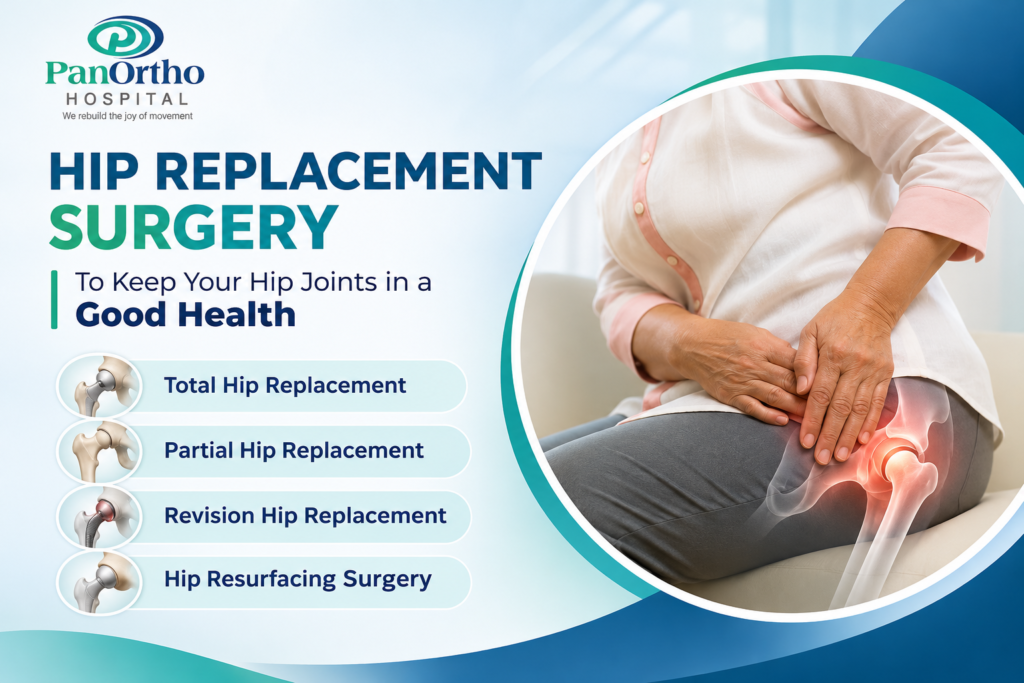
Hip pain can make even simple daily activities like walking, climbing stairs, sitting, or standing uncomfortable. When hip joint damage becomes severe, it can affect your independence and overall quality of life. Hip replacement surgery is an advanced treatment option that can help suitable patients reduce pain and improve joint function.
At PanOrtho Hospital, patients in PCMC can explore hip replacement treatment options based on their joint condition, symptoms, and medical evaluation.
What Is Hip Replacement Surgery?
Hip replacement surgery is a procedure in which damaged portions of the hip joint are replaced with artificial components called implants. The procedure aims to reduce pain, improve joint movement, and help patients return to their everyday activities.
The hip is a ball-and-socket joint that supports body weight and allows smooth leg movement. Conditions such as arthritis, severe joint damage, and certain hip injuries can affect its function.
Common Signs You May Need Hip Replacement Surgery
Persistent hip problems should not be ignored. Some common symptoms include:
-
Continuous hip pain, even while resting
-
Difficulty walking or standing for long periods
-
Stiffness and restricted hip movement
-
Pain while climbing stairs
-
Difficulty sitting down or getting up
-
Discomfort during daily activities
-
Reduced mobility due to joint damage
If these symptoms interfere with everyday life, consult an orthopaedic specialist for proper assessment.
Types of Hip Replacement Surgery
The appropriate procedure depends on the extent of joint damage and the patient’s overall health.
1. Total Hip Replacement
In total hip replacement, both the damaged ball and socket portions of the hip joint are replaced with artificial components. It is commonly considered for patients with advanced hip joint damage.
2. Partial Hip Replacement
Partial hip replacement involves replacing only the damaged ball portion of the hip joint while retaining the natural socket. It may be recommended for selected patients, depending on the condition.
3. Revision Hip Replacement
Revision hip replacement is a procedure performed to replace or repair components of an earlier hip replacement. It may be needed due to implant wear, loosening, infection, or other complications.
4. Hip Resurfacing Surgery
Hip resurfacing involves reshaping and covering the damaged surface of the hip joint rather than replacing the entire ball. It is suitable only for selected patients.
What Conditions May Require Hip Replacement?
Several conditions can cause severe hip joint damage, including:
-
Osteoarthritis
-
Rheumatoid arthritis
-
Avascular necrosis of the hip
-
Severe hip joint degeneration
-
Certain hip fractures
-
Previous hip injuries
An orthopaedic specialist can determine whether surgery or non-surgical treatment is appropriate.
Benefits of Hip Replacement Surgery
For suitable patients, hip replacement surgery may offer several benefits:
-
Relief from persistent hip joint pain
-
Improved walking ability
-
Better joint movement and flexibility
-
Greater independence in daily activities
-
Improved quality of life
-
Better ability to participate in suitable physical activities
Results vary depending on the patient’s health, joint condition, and rehabilitation.
Recovery After Hip Replacement Surgery
Recovery is an important part of successful hip replacement treatment. Patients may begin guided movement and walking with assistance as advised by their treating team.
The recovery process generally includes:
-
Following the surgeon’s instructions
-
Attending physiotherapy sessions
-
Performing recommended rehabilitation exercises
-
Taking prescribed medications
-
Maintaining a healthy lifestyle
-
Avoiding activities that place excessive stress on the healing joint
Recovery time differs from patient to patient.
Why Consider PanOrtho Hospital for Hip Replacement Surgery in PCMC?
Choosing the right hospital and orthopaedic team is an important step in joint replacement treatment.
At PanOrtho Hospital, PCMC, patients can seek orthopaedic evaluation and guidance regarding hip joint conditions and available treatment options. The treatment approach is determined according to individual medical requirements.
If hip pain is affecting your everyday routine, seeking timely medical advice can help you understand the available options.
Frequently Asked Questions
1. How do I know if I need hip replacement surgery?
Persistent hip pain, stiffness, difficulty walking, and limited movement may indicate significant joint damage. An orthopaedic evaluation is necessary to determine whether surgery is required.
2. What is the difference between total and partial hip replacement?
Total hip replacement replaces both the ball and socket, whereas partial hip replacement replaces only the ball portion.
3. How long does recovery take after hip replacement?
Recovery varies depending on the patient’s health, surgical procedure, and rehabilitation progress.
4. Can I walk after hip replacement surgery?
Most patients begin assisted walking as advised by their surgeon and physiotherapy team.
5. Where can I get hip replacement surgery in PCMC?
Patients looking for hip replacement surgery in PCMC can consult PanOrtho Hospital for an orthopaedic assessment and treatment guidance.
Conclusion
Hip pain should not prevent you from enjoying everyday life. With appropriate diagnosis and treatment, patients with severe hip joint damage may regain mobility and improve their quality of life. If you are considering hip replacement surgery in PCMC, consult PanOrtho Hospital to understand the treatment options suitable for your condition.
 Select an element to maximize. Press ESC to cancel.