
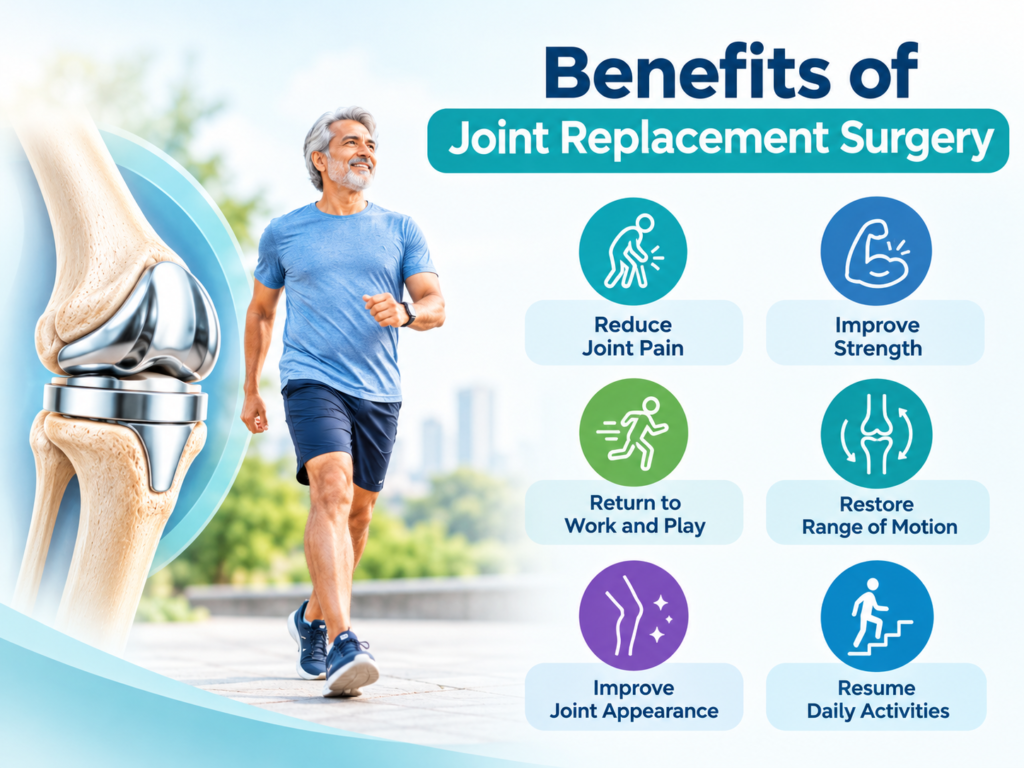
Joint pain can affect almost every part of daily life, from walking and climbing stairs to sleeping comfortably. When pain becomes persistent and starts limiting movement, joint replacement surgery may be an option worth discussing with an orthopaedic specialist.
For patients looking for joint replacement surgery in PCMC, understanding its potential benefits can help them make informed decisions about their treatment.
What Is Joint Replacement Surgery?
Joint replacement surgery is a procedure in which damaged parts of a joint are replaced with artificial components called implants. It is commonly performed for the hip and knee when conditions such as advanced osteoarthritis, severe joint damage, or certain injuries cause significant pain and difficulty with movement.
The goal of surgery is to relieve pain, improve joint function, and help patients return to daily activities. The results depend on the patient’s health, the condition of the joint, and the rehabilitation process.
1. Relief from Chronic Joint Pain
One of the main benefits of joint replacement surgery is the potential reduction in long-term joint pain. When cartilage wears away, bones can rub against each other, causing discomfort, stiffness, and inflammation.
Replacing the damaged joint surfaces can reduce this source of pain. Many patients experience meaningful relief after recovery, although the degree of improvement varies from person to person.
2. Improved Mobility and Movement
Severe joint problems can make walking, standing, and climbing stairs difficult. Joint replacement may improve movement by addressing damaged joint surfaces and restoring function.
With appropriate physiotherapy and rehabilitation, patients can gradually work towards improved mobility and greater independence in their daily routines.
3. Better Range of Motion
Joint stiffness can interfere with simple movements, such as bending the knee or moving the hip comfortably. After surgery and rehabilitation, some patients experience an improvement in their range of motion.
The final result depends on the severity of the joint damage, muscle strength, flexibility, and commitment to the recommended recovery plan.
4. Improved Strength and Daily Function
Joint pain often causes people to reduce their physical activity. Over time, this may contribute to muscle weakness and reduced endurance.
Once pain improves and movement becomes easier, patients can work with their physiotherapy team to rebuild strength and improve balance. This may help them perform everyday activities with greater comfort.
5. Return to Normal Activities
Many patients choose joint replacement surgery because pain prevents them from enjoying their usual routines.
Depending on recovery and medical advice, patients may gradually return to activities such as walking, shopping, light household work, and other low-impact exercises. High-impact activities may need to be avoided or modified to protect the artificial joint.
6. Improved Joint Alignment and Function
In some patients, advanced joint damage can cause deformity or changes in alignment. Joint replacement surgery may help correct certain alignment problems and improve the mechanical function of the joint.
Better alignment can support movement and comfort, although the outcome depends on the individual’s condition and surgical plan.
7. Better Quality of Life
Living with constant joint pain can affect sleep, independence, social activities, and emotional well-being. When surgery successfully reduces pain and improves mobility, patients may find it easier to participate in everyday life.
Joint replacement is not a guarantee of complete pain relief, but it can offer significant benefits for appropriately selected patients.
Who May Need Joint Replacement Surgery?
An orthopaedic specialist may consider joint replacement when a patient experiences:
-
Persistent hip or knee pain that affects daily activities
-
Advanced osteoarthritis or significant joint damage
-
Stiffness and reduced movement
-
Difficulty walking or standing for long periods
-
Limited improvement with medication, physiotherapy, activity modification, or other appropriate treatments
Surgery is not necessary for everyone with joint pain. A specialist will assess symptoms, medical history, physical examination findings, and imaging results before recommending treatment.
What to Expect During Recovery?
Recovery after joint replacement surgery varies depending on the type of procedure, overall health, and individual progress.
Patients may be encouraged to begin supported movement soon after surgery when medically appropriate. Physiotherapy plays an important role in improving strength, flexibility, balance, and walking ability.
Following medical advice, taking prescribed medication, caring for the surgical wound, and attending follow-up appointments can support recovery. Patients should also follow instructions about activity restrictions and watch for signs of complications.
Choosing Joint Replacement Surgery in PCMC
Choosing the right hospital and orthopaedic team is an important step when considering joint replacement. Patients should discuss the expected benefits, potential risks, available treatment options, implant considerations, and rehabilitation requirements before making a decision.
PanOrtho Hospital provides orthopaedic care for patients seeking evaluation and treatment for joint problems in the PCMC area. If persistent joint pain is affecting your daily life, consult an orthopaedic specialist to understand the most appropriate treatment options for your condition.
Conclusion
Joint replacement surgery can help reduce chronic pain, improve mobility, restore joint function, and support a better quality of life for suitable patients. Early evaluation and an appropriate treatment plan can help patients understand their options and make informed decisions.
If you are searching for joint replacement surgery in PCMC, consult an orthopaedic specialist at PanOrtho Hospital to discuss your symptoms and treatment needs.
 Select an element to maximize. Press ESC to cancel.