
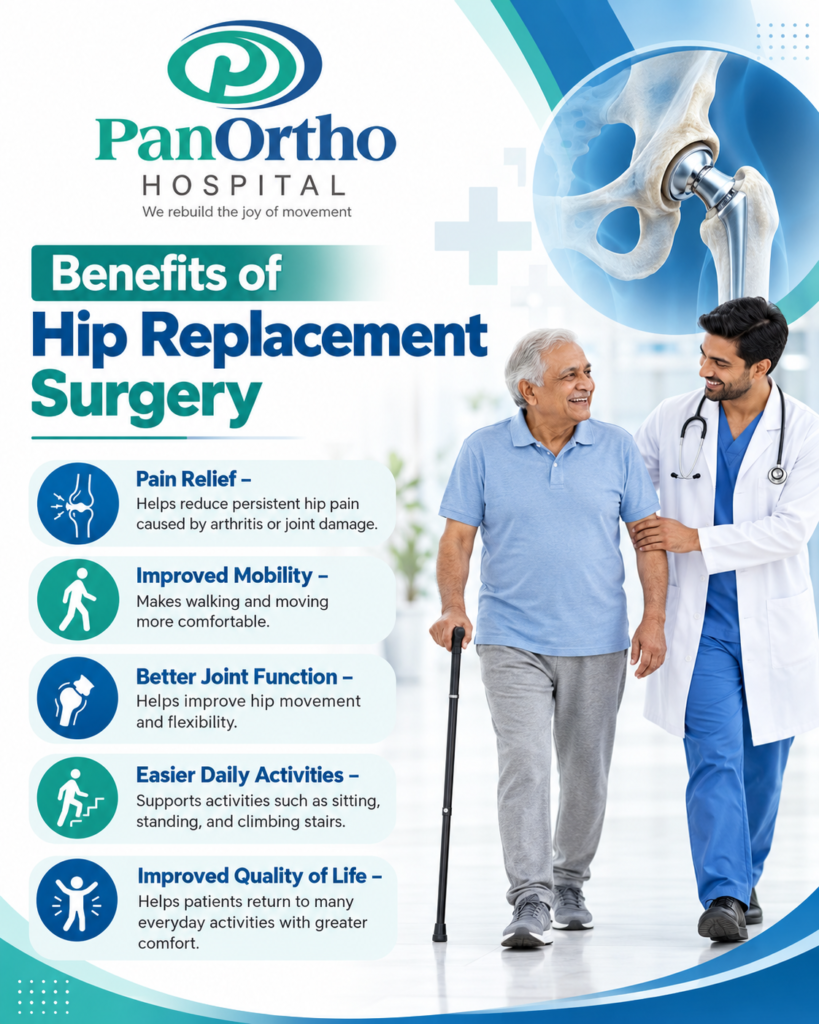
Hip pain can make everyday activities such as walking, climbing stairs, sitting, and sleeping uncomfortable. When hip joint damage becomes severe and medicines, physiotherapy, or other non-surgical treatments no longer provide enough relief, hip replacement surgery may be an effective treatment option.
For people looking for a hip replacement surgery hospital or an orthopedic hospital in PCMC, understanding the benefits, recovery process, and suitability of this procedure can help them make informed decisions. PanOrtho Hospital aims to help patients understand their orthopedic treatment options and take steps toward better mobility and quality of life.
What Is Hip Replacement Surgery?
Hip replacement surgery, also known as hip arthroplasty, is a procedure in which damaged parts of the hip joint are replaced with artificial components. The surgery is commonly recommended for people with severe arthritis, significant joint damage, or persistent hip pain that affects their quality of life.
The main goal of this procedure is to reduce pain, improve joint movement, and help patients return to their daily activities more comfortably.
7 Important Benefits of Hip Replacement Surgery
1. Relief from Chronic Hip Pain
One of the major benefits of hip replacement surgery is relief from persistent hip pain caused by joint damage or arthritis. Replacing the damaged joint surfaces can significantly reduce discomfort and make daily movements easier.
2. Improved Mobility and Flexibility
Hip joint damage can restrict movement and make walking difficult. After appropriate surgery and rehabilitation, many patients experience improved joint function and greater ease of movement.
3. Better Quality of Life
Chronic hip pain can affect sleep, work, social activities, and independence. Hip replacement surgery may help patients participate more comfortably in everyday activities and improve their overall quality of life.
4. Easier Walking and Daily Activities
Activities such as getting out of a chair, walking short distances, and climbing stairs may become easier after recovery. Physiotherapy and following the surgeon’s instructions are important for achieving the best possible results.
5. Reduced Dependence on Pain Medication
By addressing the underlying joint damage, hip replacement surgery may reduce the need for long-term pain-relief medication. Medication changes should always be discussed with the treating doctor.
6. Improved Sleep and Comfort
Severe hip pain can disturb sleep, especially when changing positions in bed. As pain improves after surgery, patients may find it easier to rest comfortably and maintain their daily routine.
7. Long-Term Improvement in Joint Function
Modern hip replacement implants are designed to provide durable joint function. Implant longevity varies according to factors such as the patient’s age, activity level, implant type, and overall health.
When Should You Consider Hip Replacement Surgery?
An orthopaedic specialist may recommend hip replacement surgery when a patient experiences:
-
Persistent hip pain that affects daily activities.
-
Severe osteoarthritis or rheumatoid arthritis affecting the hip.
-
Stiffness and reduced range of motion.
-
Difficulty walking or climbing stairs.
-
Hip pain that interferes with sleep.
-
Limited improvement with non-surgical treatments.
The decision to undergo surgery depends on the severity of symptoms, examination findings, imaging results, general health, and the patient’s individual needs.
What Is the Recovery Process After Hip Replacement Surgery?
Recovery varies from person to person. Many patients begin standing or walking with assistance soon after surgery, depending on their condition and the surgeon’s advice.
The recovery process may include:
-
Early mobilisation: Starting safe movements and walking with assistance.
-
Physiotherapy: Performing recommended exercises to improve strength, balance, and mobility.
-
Pain management: Following prescribed medication and wound-care instructions.
-
Follow-up appointments: Monitoring healing, joint function, and recovery progress.
-
Activity modification: Avoiding movements or activities that the surgeon advises against during recovery.
Following medical advice and attending physiotherapy sessions can help support a safer recovery.
Choosing an Orthopaedic Hospital in PCMC for Hip Replacement Surgery
If you are looking for a hip replacement surgery hospital in PCMC, consider a hospital with qualified orthopaedic specialists, appropriate surgical facilities, rehabilitation support, and clear guidance throughout the treatment process.
Before deciding on surgery, discuss the expected benefits, possible complications, implant options, recovery timeline, and rehabilitation plan with your orthopaedic surgeon.
Conclusion
Hip replacement surgery can help reduce chronic hip pain, improve mobility, and restore independence for people with significant hip joint damage. With an appropriate treatment plan, surgical care, and rehabilitation, many patients can return to daily activities with greater comfort.
If hip pain is affecting your quality of life, consult an orthopaedic specialist to determine whether hip replacement surgery is suitable for you. Choosing the right orthopaedic hospital in PCMC is an important step toward informed treatment and recovery.
 Select an element to maximize. Press ESC to cancel.