
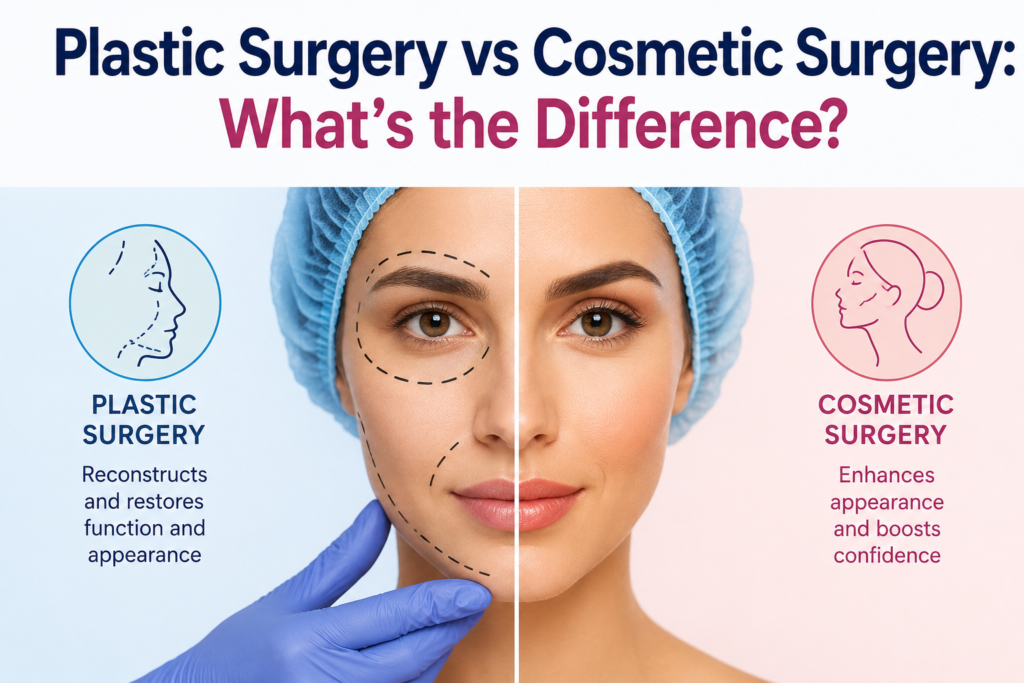
When people hear the term plastic surgery, they often associate it only with procedures that enhance appearance. In reality, plastic surgery is a broader surgical specialty that includes both reconstructive and cosmetic procedures, each serving different purposes.
Today, these services are increasingly available through multispecialty hospitals, making expert evaluation more accessible. In PCMC, patients can consult the specialist team at PanOrtho Hospital, for guidance on suitable plastic or cosmetic surgery options based on their individual needs.
Whether the goal is to restore function after an injury, correct a physical concern, or enhance appearance, understanding the difference between plastic and cosmetic surgery can help you make a more informed decision.
What Is Plastic Surgery?
Plastic surgery focuses on repairing, reconstructing, or reshaping tissues to improve function, appearance, or both.
It can be broadly divided into two areas:
- Reconstructive plastic surgery
- Cosmetic plastic surgery
Reconstructive procedures may be performed after accidents, burns, cancer treatment, congenital conditions, infections, or other situations that affect the structure or function of a body part.
Examples may include scar revision, reconstruction after trauma or burns, hand and soft-tissue reconstruction, and breast reconstruction after cancer surgery.
What Is Cosmetic Surgery?
Cosmetic surgery is primarily performed to enhance or change the appearance of otherwise normal body structures according to the patient’s goals.
Common examples include:
- Rhinoplasty
- Facelift
- Breast augmentation
- Breast lift
- Liposuction
- Tummy tuck or abdominoplasty
- Body contouring
Cosmetic procedures may be surgical or, depending on the treatment, non-surgical.
Plastic Surgery vs Cosmetic Surgery: Key Difference
The simplest way to understand the difference is the primary purpose of the procedure.
| Plastic Surgery | Cosmetic Surgery |
|---|---|
| Broader surgical specialty | Aesthetic-focused branch of plastic surgery |
| Includes reconstructive and cosmetic procedures | Primarily aims to enhance appearance |
| Can restore function and appearance | Primarily focuses on appearance |
| May address trauma, burns, congenital conditions or disease-related changes | Often performed on normal body structures to change their appearance |
There can also be overlap. For example, a procedure may have both functional and aesthetic goals depending on the patient’s condition.
Is Reconstructive Surgery the Same as Cosmetic Surgery?
No. Although both are part of the wider field of plastic surgery, their primary goals are different.
Reconstructive surgery generally aims to restore or improve function and appearance after an injury, medical condition, congenital abnormality or tissue loss.
Cosmetic surgery primarily aims to enhance appearance or change the shape or proportion of a normal body structure.
When Should You Consult a Plastic Surgeon?
A plastic surgeon may be consulted for a wide range of concerns, including:
- Accident or trauma-related tissue damage
- Burn scars or significant scars
- Congenital deformities
- Hand and soft-tissue problems
- Reconstruction after cancer treatment
- Concerns related to body shape or appearance
- Other reconstructive or aesthetic needs
The appropriate procedure depends on your medical history, anatomy, goals and overall health. A consultation is important before deciding whether surgery is appropriate.
Choosing the Right Plastic Surgery Care
Whether the goal is reconstruction or aesthetic improvement, patients should understand the expected benefits, limitations, risks and recovery before undergoing a procedure.
If you are looking for plastic surgery in Pimpri Chinchwad, choose a qualified specialist who can assess your individual concern and recommend an appropriate treatment approach.
For patients exploring aesthetic procedures, a consultation with a qualified specialist can also help determine whether surgical or non-surgical treatment is more suitable.
Frequently Asked Questions
Is plastic surgery only for cosmetic purposes?
No. Plastic surgery also includes reconstructive procedures that can help restore function and appearance after injuries, burns, congenital conditions, disease or other tissue damage.
Is cosmetic surgery a type of plastic surgery?
Yes. Cosmetic surgery is generally considered one part of the broader field of plastic surgery, alongside reconstructive surgery.
Can plastic surgery improve both function and appearance?
Yes. Many reconstructive procedures aim to restore function while also improving the appearance of the affected area.
How do I know which procedure is right for me?
The right treatment depends on your condition, goals, medical history and examination. A consultation with a qualified plastic surgeon is the best way to determine appropriate options.
Conclusion
Plastic surgery is broader than cosmetic surgery. While cosmetic surgery focuses mainly on enhancing appearance, reconstructive plastic surgery can help restore form and function after injury, disease, congenital conditions or other physical changes.
If you are considering reconstructive or aesthetic treatment, professional evaluation can help you understand your options and choose an approach suited to your needs. Looking for a cosmetic surgery hospital in PCMC? Speak with our specialist to discuss your concerns, treatment options and expected outcomes.