
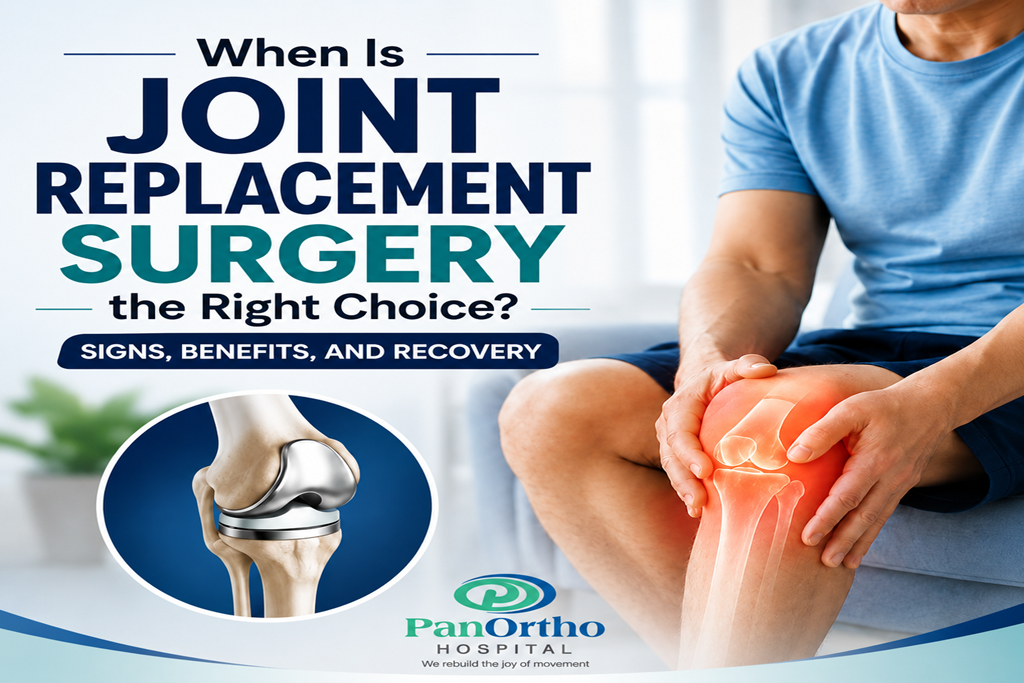
Living with chronic joint pain can significantly affect your quality of life. Simple activities such as walking, climbing stairs, getting up from a chair, or even sleeping comfortably may become challenging. While medications, physiotherapy, lifestyle modifications, and injections can provide relief for many patients, there comes a point when these treatments may no longer be effective.
Joint replacement surgery is a proven solution for patients suffering from severe joint damage and persistent pain. At Panortho Hospital, our experienced orthopedic specialists in Nigdi PCMC, provide comprehensive evaluation and advanced joint replacement procedures to help patients regain mobility, reduce pain, and return to an active lifestyle. But how do you know when it’s the right time to consider surgery? Understanding the signs, benefits, and recovery process can help you make an informed decision about your joint health.
What Is Joint Replacement Surgery?
Joint replacement surgery involves removing damaged portions of a joint and replacing them with artificial components designed to restore function and reduce pain. The most commonly replaced joints include:
- Knee Joint
- Hip Joint
- Shoulder Joint
- Elbow Joint (in selected cases)
Modern joint replacement techniques are highly advanced, offering excellent outcomes and long-lasting results.
Signs You May Need Joint Replacement Surgery:
1. Persistent Joint Pain
If joint pain continues despite medications, physiotherapy, or other conservative treatments, it may indicate advanced joint damage.
2. Difficulty Performing Daily Activities
Struggling with routine activities such as walking, climbing stairs, sitting, standing, or dressing can be a sign that your joint function is severely compromised.
3. Reduced Range of Motion
Stiffness and loss of flexibility can make movement difficult and affect your independence.
4. Joint Deformity
Visible changes in joint alignment, such as bowing of the knees or altered posture, may indicate advanced arthritis.
5. Pain That Disturbs Sleep
Joint pain that continues at night or interrupts sleep often suggests significant joint degeneration.
6. Failure of Non-Surgical Treatments
When medications, injections, weight management, and physiotherapy no longer provide meaningful relief, surgery may be the next step.
Common Conditions That May Require Joint Replacement:
Osteoarthritis
The most common reason for joint replacement, osteoarthritis causes gradual wear and tear of cartilage, leading to pain and stiffness.
Rheumatoid Arthritis
This autoimmune condition can damage joint structures and lead to severe functional limitations.
Post-Traumatic Arthritis
Joint damage following injuries or fractures can accelerate cartilage deterioration.
Avascular Necrosis
Loss of blood supply to the bone can result in joint collapse, particularly in the hip.
Benefits of Joint Replacement Surgery:
Significant Pain Relief
Most patients experience substantial reduction or complete elimination of chronic joint pain.
Improved Mobility
Replacing damaged joint surfaces allows smoother movement and greater flexibility.
Better Quality of Life
Patients often return to activities they previously avoided due to pain and stiffness.
Enhanced Independence
Daily tasks become easier, allowing patients to maintain an active lifestyle.
Long-Term Results
Modern implants are designed to last many years, with many patients enjoying long-lasting improvements in function and comfort.
What Happens During the Surgery?
The procedure varies depending on the joint being replaced. Generally, the surgeon:
- Removes damaged cartilage and bone.
- Prepares the joint surfaces.
- Places artificial implants made of metal, ceramic, or durable plastic.
- Tests joint stability and movement.
- Closes the incision and begins the recovery process.
Advances in surgical techniques have made joint replacement safer and more precise than ever before.
Recovery After Joint Replacement Surgery:
Immediate Recovery
Most patients begin moving the joint within a day of surgery under medical supervision.
Physiotherapy
A structured rehabilitation program helps restore strength, flexibility, and function.
Returning to Daily Activities
- Walking usually begins within days.
- Routine household activities can often be resumed within a few weeks.
- Full recovery may take several months, depending on the joint and individual health factors.
Tips for a Smooth Recovery
- Follow your surgeon’s instructions carefully.
- Attend all physiotherapy sessions.
- Maintain a healthy weight.
- Stay physically active as recommended.
- Avoid activities that place excessive stress on the new joint.
Is Joint Replacement Safe?
Joint replacement surgery is considered one of the most successful orthopedic procedures worldwide. Advances in anesthesia, surgical techniques, infection prevention, and implant design have significantly improved safety and patient outcomes.
A thorough evaluation by the orthopedic specialists at Panortho Hospital helps determine whether joint replacement surgery is the right option for you. Our team focuses on personalized treatment planning, advanced surgical care, and comprehensive rehabilitation to help patients achieve the best possible outcomes and a smoother recovery.
When Should You Consult an Orthopedic Specialist?
You should consider consulting an orthopedic surgeon if:
- Joint pain affects your daily life.
- Walking or climbing stairs becomes difficult.
- Conservative treatments no longer provide relief.
- Joint stiffness limits your movement.
- Pain interferes with sleep or work.
Early evaluation can help identify the most appropriate treatment option and prevent further joint deterioration.
Conclusion:
Joint replacement surgery can be life-changing for individuals suffering from severe joint pain and mobility limitations. When non-surgical treatments fail and daily activities become increasingly difficult, joint replacement may offer lasting pain relief, improved mobility, and a better quality of life.
If persistent joint pain is affecting your independence and overall well-being, consulting an experienced orthopedic specialist can help determine whether joint replacement surgery is the right choice for you. At Panortho Hospital, PCMC, our expert orthopedic team provides comprehensive evaluation, advanced joint replacement procedures, and personalized rehabilitation programs to help patients return to an active and pain-free life.
Don’t let joint pain limit your daily activities. Book your appointment with the orthopedic specialists at Panortho Hospital, PCMC, and take the first step toward improved mobility and long-term joint health. Visit us today for expert orthopedic care in Nigdi PCMC.